
- 24/7
Customer Service
- ISO 9001
Certification Company
- Qualified
Expert Professional
H2s-gas-analyzer
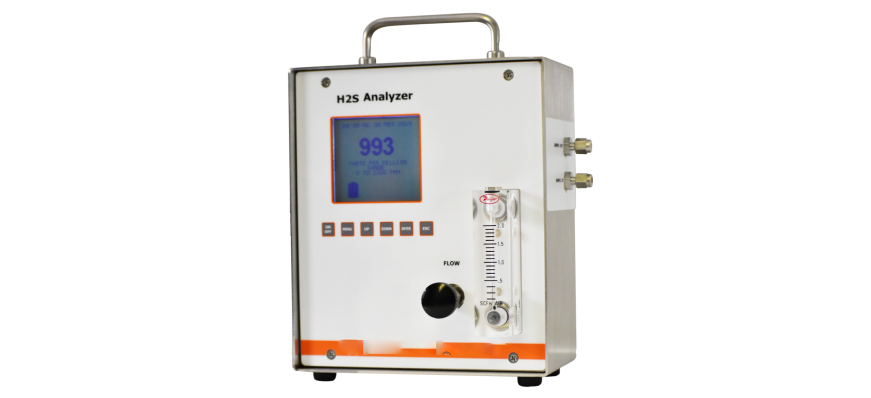
Protecting Lives: H2S Gas Analyzer
Introduction
Hydrogen sulfide (H2S) is a highly toxic gas commonly found in various industrial environments such as oil and gas production, wastewater treatment, and chemical manufacturing. Exposure to even low concentrations of H2S can pose serious health risks, including respiratory irritation, neurological effects, and in severe cases, fatalities. To safeguard lives and ensure workplace safety, the utilization of H2S gas analyzers is crucial for accurate detection and continuous monitoring of H2S concentrations in the air.
Understanding H2S Gas Analyzers
What is an H2S Gas Analyzer?
An H2S gas analyzer is a specialized instrument designed to detect, measure, and monitor hydrogen sulfide gas concentrations in ambient air or industrial settings. These analyzers employ various detection technologies, such as electrochemical sensors, colorimetric tubes, or photoionization detectors, to provide precise and reliable measurements of H2S levels.
How Do H2S Gas Analyzers Work?
The operation of an H2S gas analyzer involves sampling air or gas from the environment and analyzing hydrogen sulfide gas concentrations within the sample. Depending on the type of analyzer, different detection principles may be employed to accurately quantify H2S levels. The analyzer then generates real-time data on H2S concentrations, enabling proactive measures to be taken in response to detected gas levels.
Advantages of H2S Gas Analyzers
Early Detection
One of the primary advantages of H2S gas analyzers is their ability to provide early detection of hydrogen sulfide gas leaks or emissions in industrial settings. These analyzers continuously monitor H2S levels, alerting personnel to potential hazards and allowing for prompt intervention to mitigate risks.
Continuous Monitoring
H2S gas analyzers offer continuous monitoring capabilities, providing real-time data on changes in hydrogen sulfide gas concentrations in the environment. This enables operators to promptly respond to fluctuations in H2S levels, ensuring the safety of personnel and preventing potential exposure incidents.
Safety Assurance
Utilizing H2S gas analyzers helps industrial facilities maintain safe working conditions and protect personnel from the harmful effects of hydrogen sulfide exposure. By ensuring accurate monitoring of H2S levels, these analyzers enable proactive measures to be taken to prevent accidents and mitigate health risks.
Types of H2S Gas Analyzers
Electrochemical Sensors
Electrochemical sensors utilize chemical reactions occurring at electrode surfaces to detect hydrogen sulfide gas concentrations. These sensors offer fast response times, high sensitivity, and low detection limits, making them suitable for both personal and fixed-point monitoring applications.
Colorimetric Tubes
Colorimetric tubes are simple, low-cost devices used for on-the-spot measurement of H2S concentrations. These tubes contain a reagent that reacts with hydrogen sulfide gas to produce a color change, which can be visually compared to a calibrated scale to determine H2S levels.
Photoionization Detectors
Photoionization detectors (PIDs) utilize ultraviolet (UV) light to ionize hydrogen sulfide molecules, producing a measurable current proportional to H2S concentrations. PIDs offer rapid response times and high sensitivity, making them suitable for detecting low levels of H2S in ambient air.
Conclusion
H2S gas analyzers play a critical role in protecting lives and ensuring workplace safety in industries where hydrogen sulfide gas is present. By providing accurate detection and continuous monitoring of H2S concentrations, these analyzers help mitigate potential health risks associated with hydrogen sulfide exposure. As industries continue to prioritize safety and environmental protection, the adoption of H2S gas analyzers will remain essential for achieving these objectives.